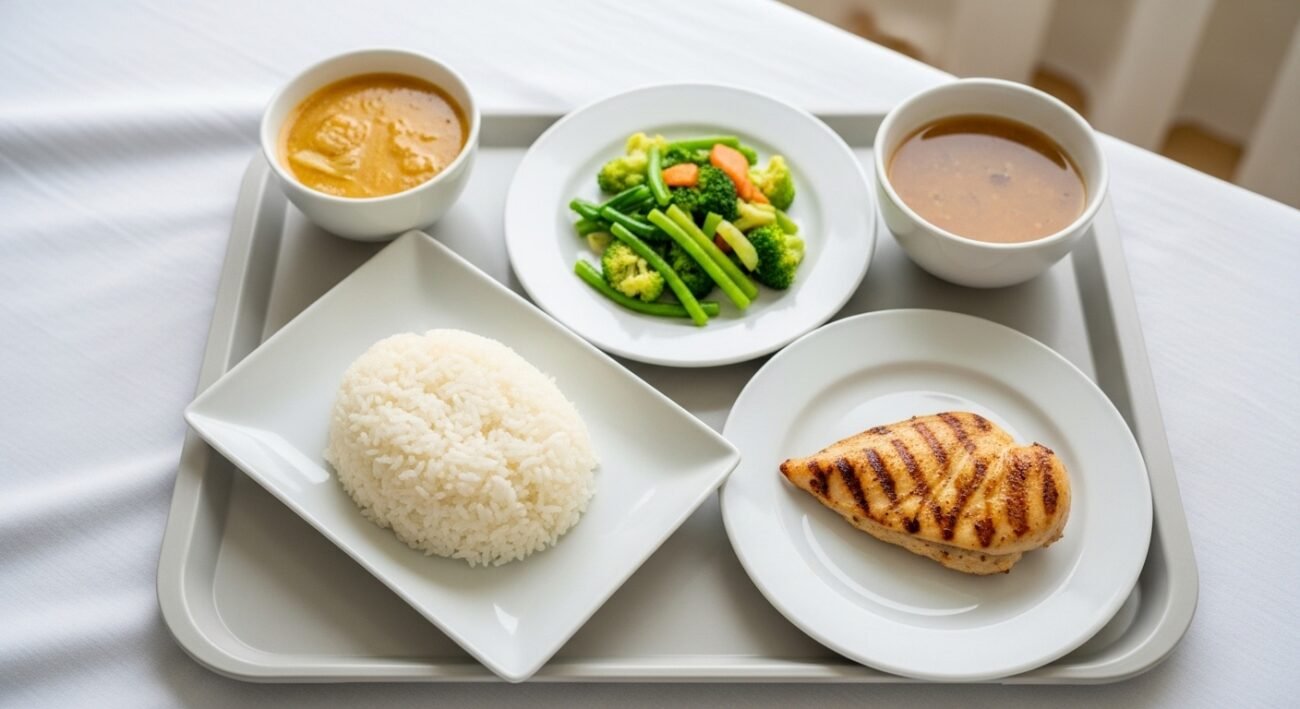
Hospital food often gets a bad reputation, but around the world it reflects local culture, nutrition standards, and ideas about healing. From simple comfort meals to surprisingly well-balanced plates, here’s how hospital food looks across different countries.
Japan
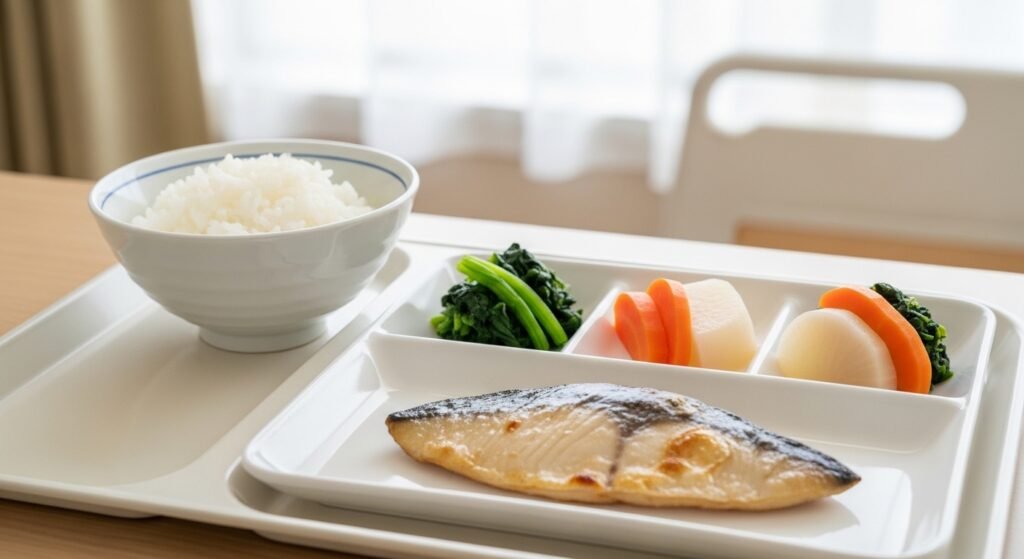
Japanese hospitals focus on light, balanced meals designed to aid digestion. Patients are often served rice, grilled fish, miso soup, and small vegetable sides. Presentation matters, and portions are modest, emphasizing nourishment without overwhelming the body.
France
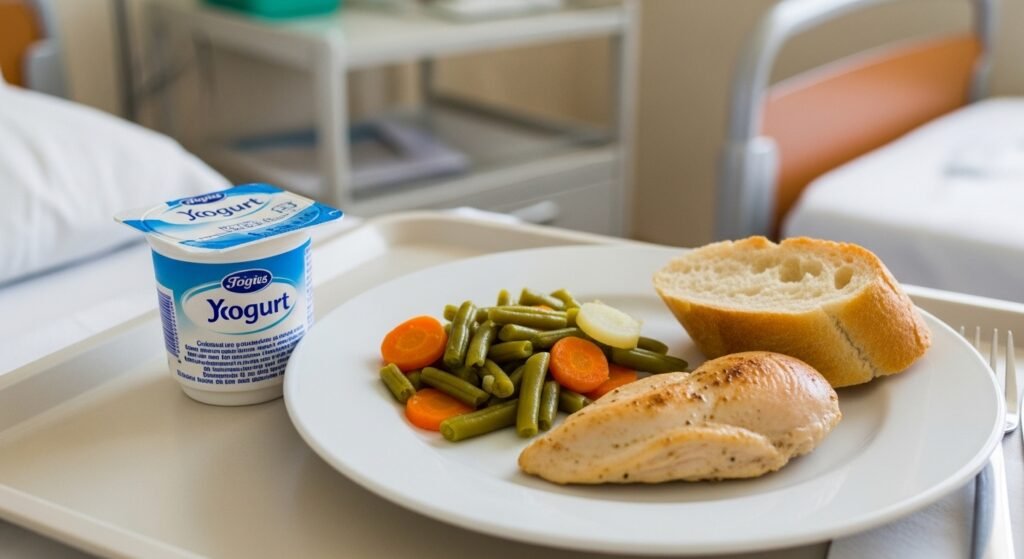
In France, hospital meals often resemble simplified home cooking. Patients may receive vegetables, protein like chicken or fish, yogurt, and sometimes bread. While not gourmet, the food reflects France’s emphasis on balanced meals and eating at set times.
Italy
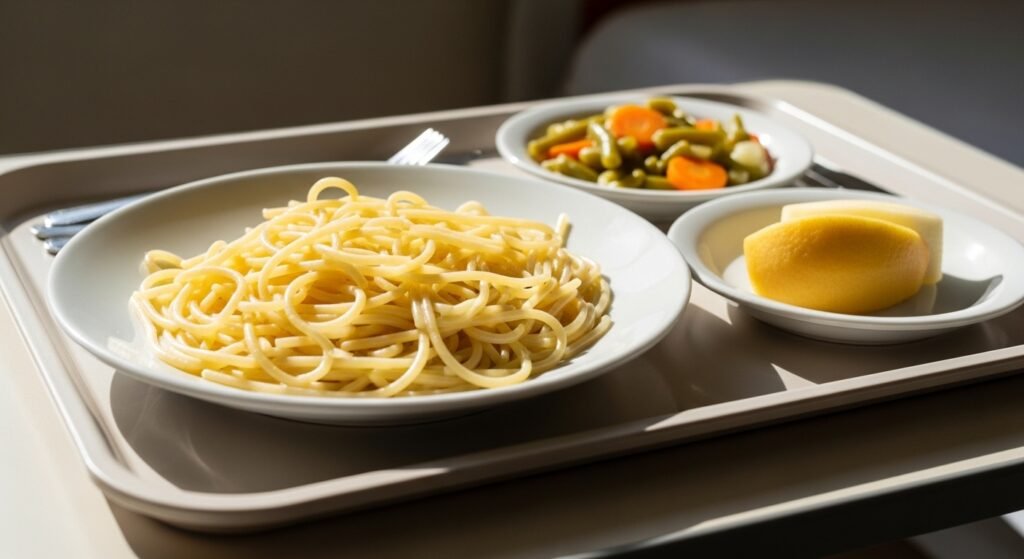
Italian hospitals commonly serve pasta, soups, vegetables, and fruit. Meals are straightforward but familiar, aiming to feel comforting rather than indulgent. Olive oil, simple sauces, and warm dishes help patients feel cared for during recovery.
United States
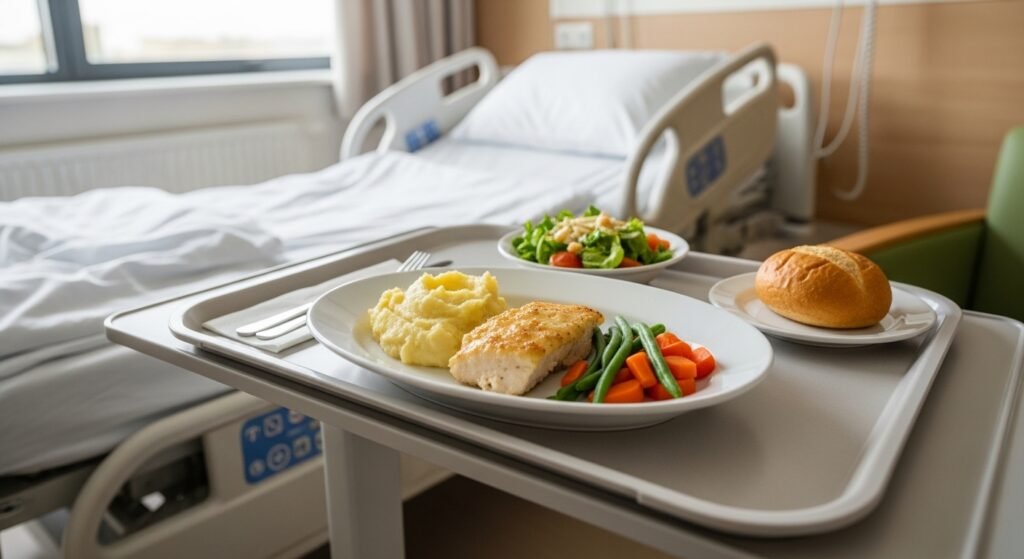
Hospital food in the U.S. varies widely by facility. Meals often include protein, a starch, vegetables, and dessert, sometimes with customizable options. While convenience-focused, many hospitals are gradually improving nutrition and freshness.
South Korea
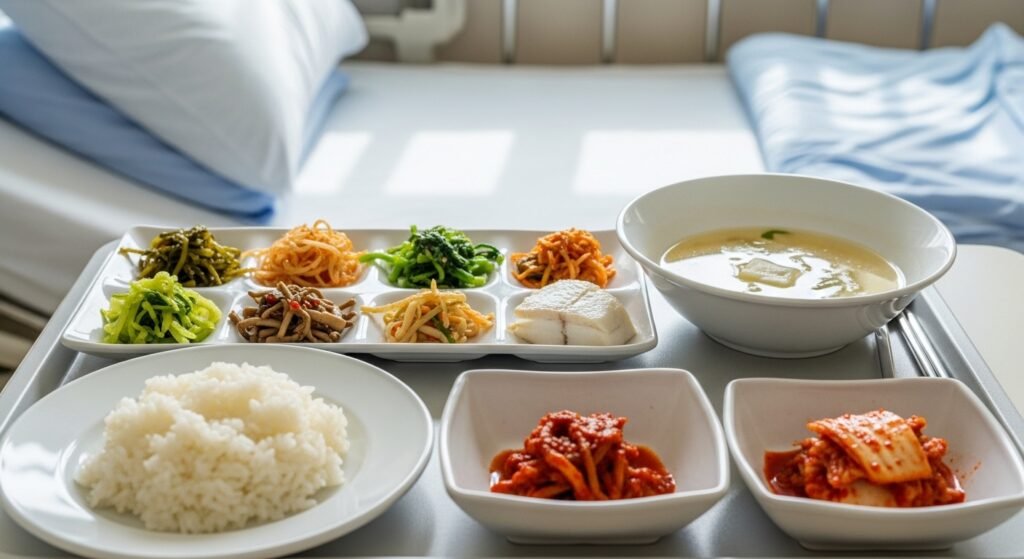
South Korean hospital meals often resemble traditional home food. Patients may receive rice, soup, vegetables, and fermented sides like kimchi. These meals focus on balance and familiarity, helping patients feel grounded while healing.
Germany
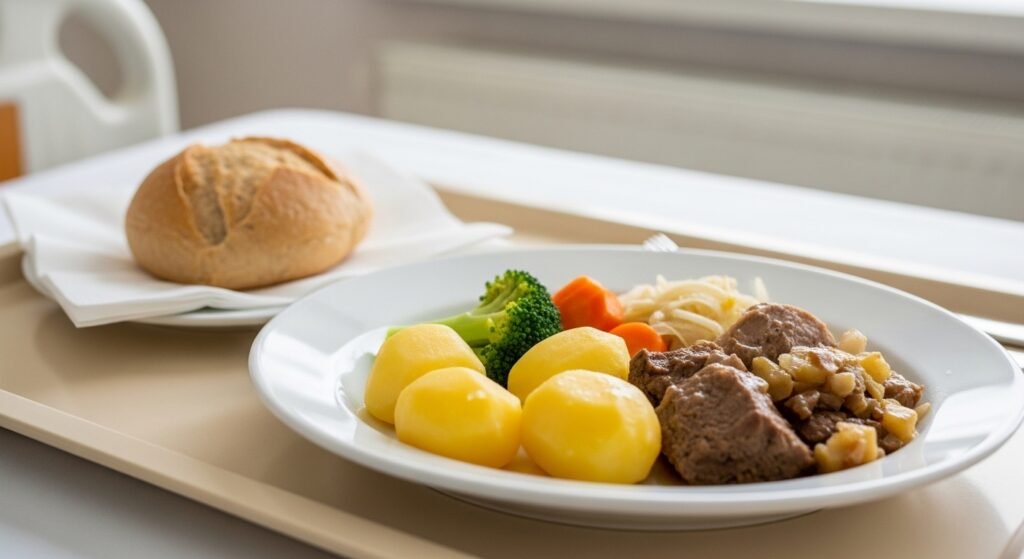
German hospital food tends to be hearty and practical. Meals often include bread, potatoes, meat or fish, vegetables, and dairy. Portions are filling, designed to maintain strength rather than impress visually.
India
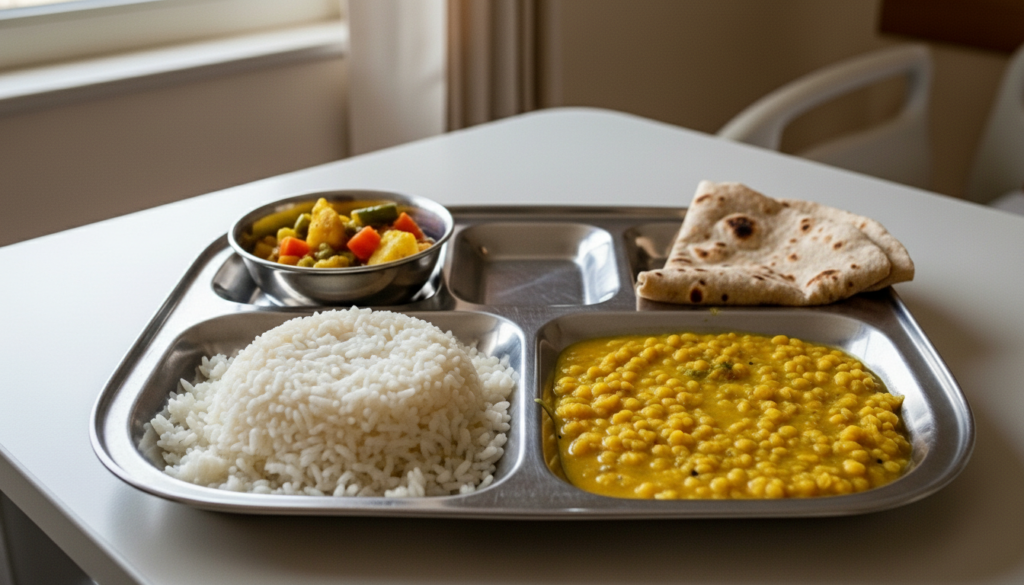
In India, hospital food varies by region but often includes rice or flatbread, lentils, vegetables, and mild spices. Meals are typically vegetarian-friendly and designed to be gentle on digestion while still nourishing.
United Kingdom
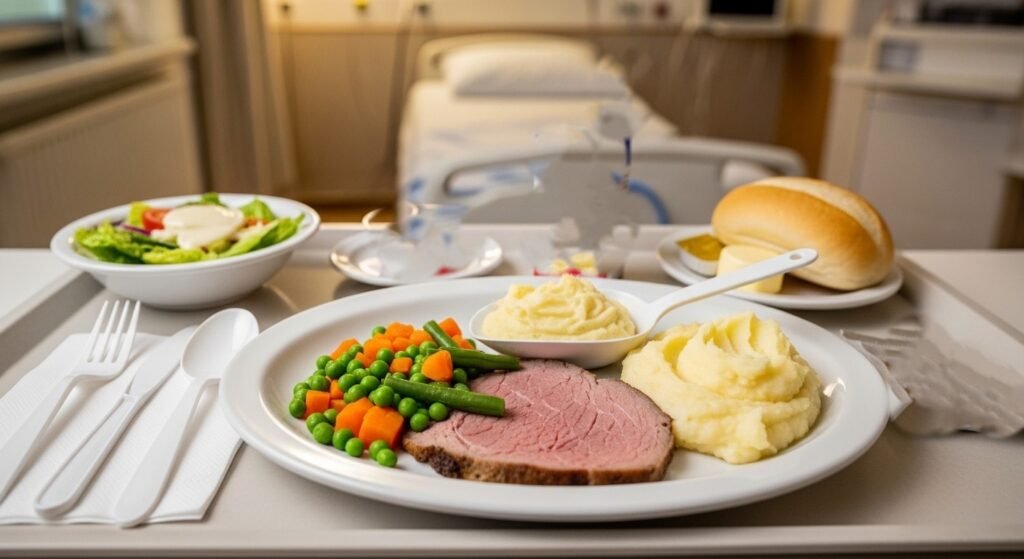
UK hospital food usually includes simple hot meals such as meat with vegetables, soups, or casseroles. While basic, there is increasing focus on patient choice, dietary needs, and improved nutritional balance.
Thailand
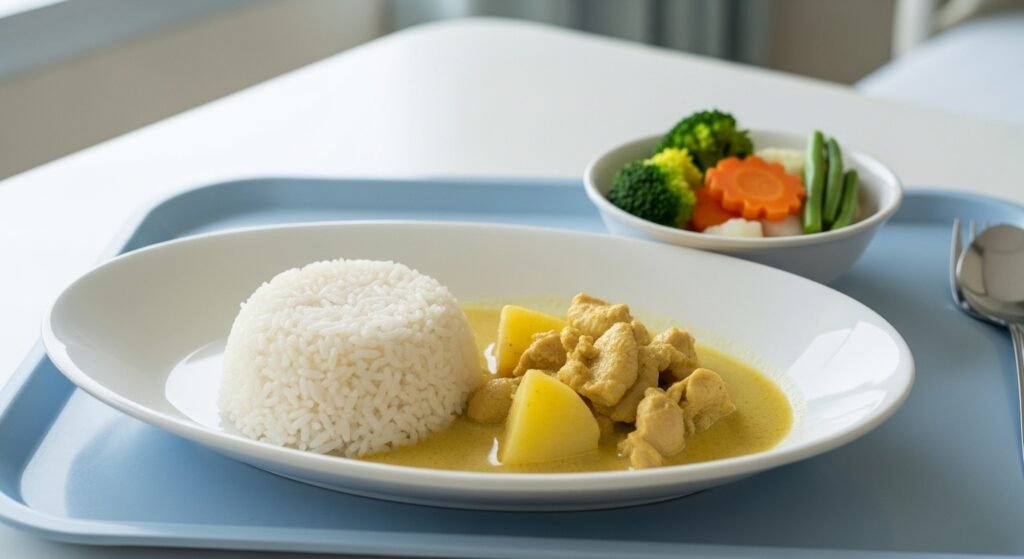
Thai hospital meals are generally light and rice-based. Patients may receive soups, steamed vegetables, and mild curries. Strong spices are often reduced, but the food still reflects local flavors and traditions.
Brazil
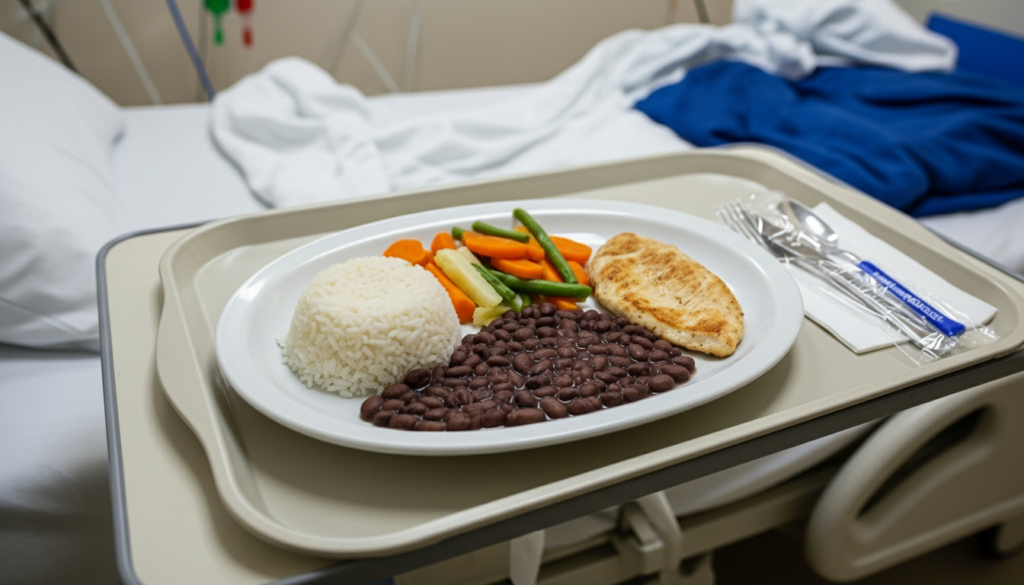
Brazilian hospital food often includes rice, beans, vegetables, and protein like chicken or fish. Meals are simple, filling, and familiar, reflecting everyday Brazilian home cooking rather than special dietary trends.
Sweden
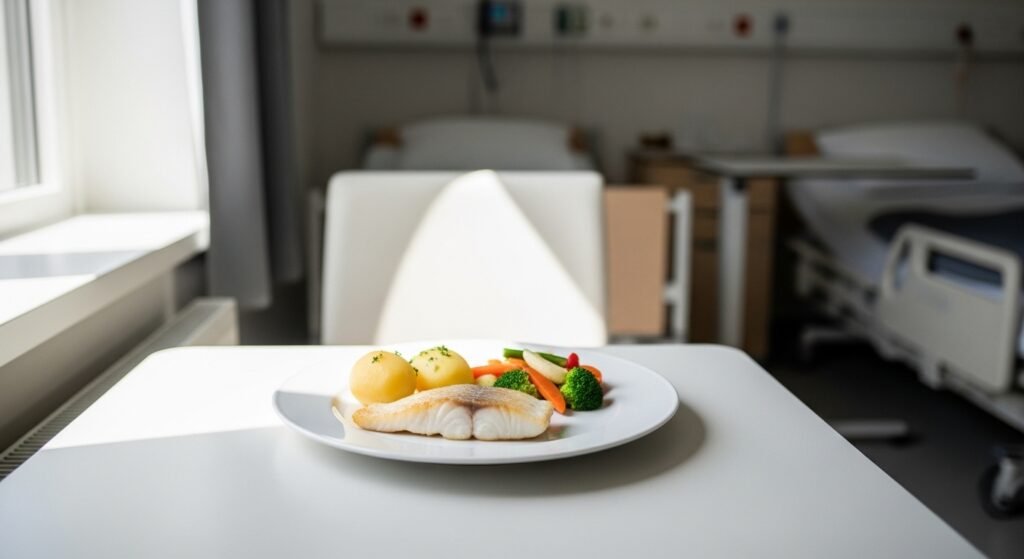
Swedish hospitals emphasize nutrition and simplicity. Meals may include fish, potatoes, vegetables, and dairy. There is a strong focus on balanced diets, clean flavors, and supporting overall recovery.
China
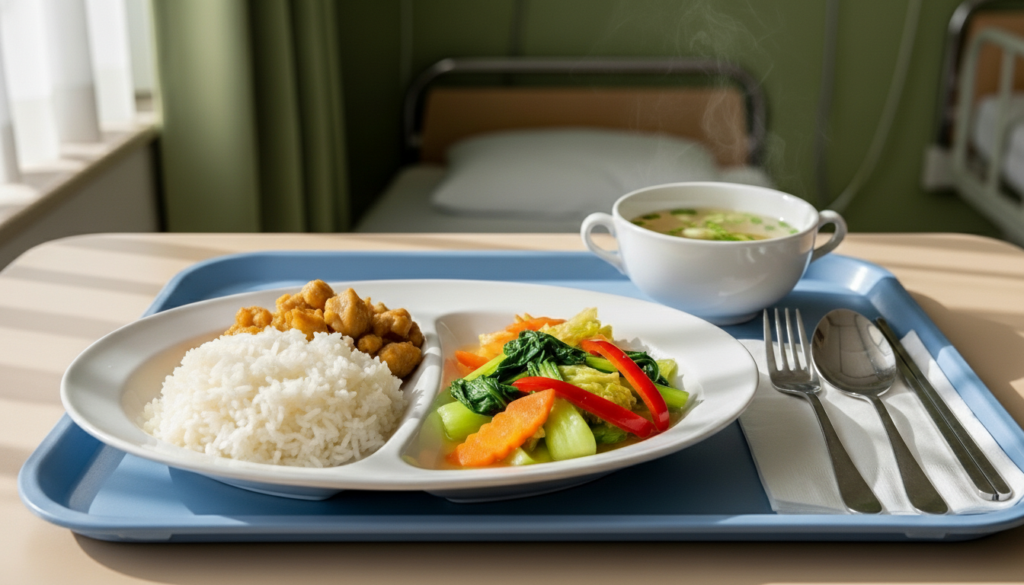
Chinese hospital meals vary by region but often include rice or noodles, vegetables, soup, and small portions of protein. Food is seen as part of healing, with meals designed to restore balance in the body.
Mexico
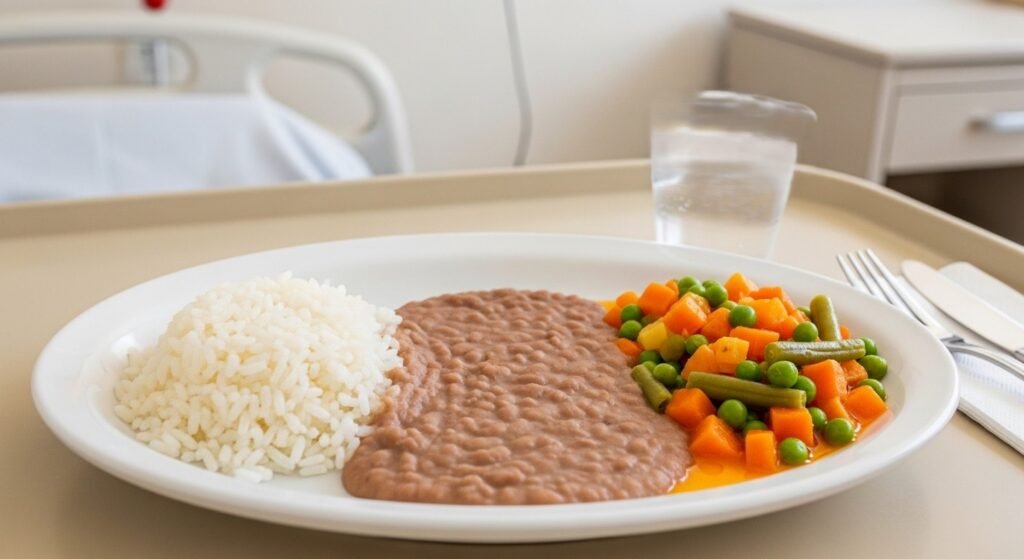
Hospital food in Mexico often features rice, beans, mild sauces, and vegetables. Spices are toned down, but the meals still reflect traditional Mexican flavors in a gentler form suitable for patients.
Australia
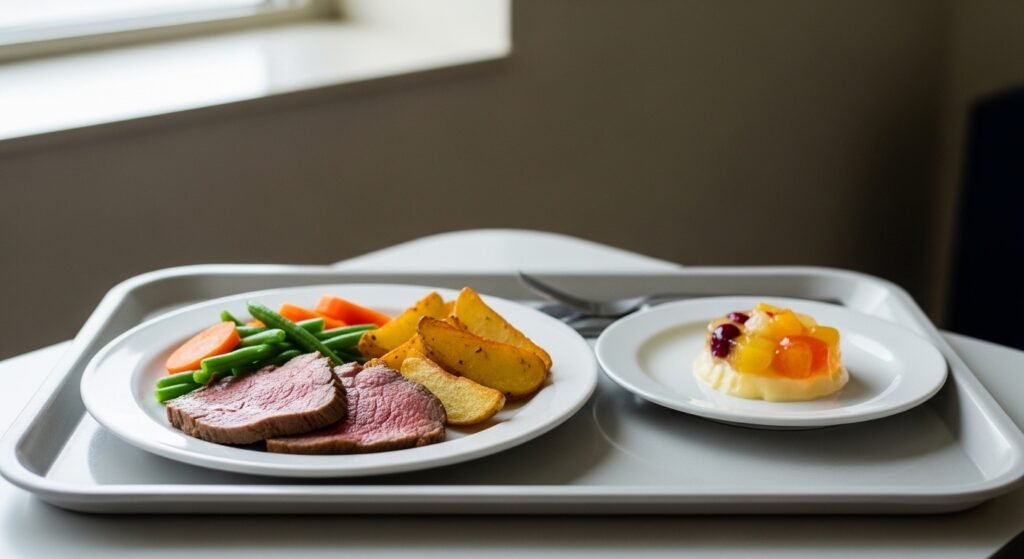
Australian hospital meals are similar to Western comfort food, including meats, vegetables, soups, and desserts. Many hospitals offer menu choices and focus on accommodating different dietary needs.
Turkey
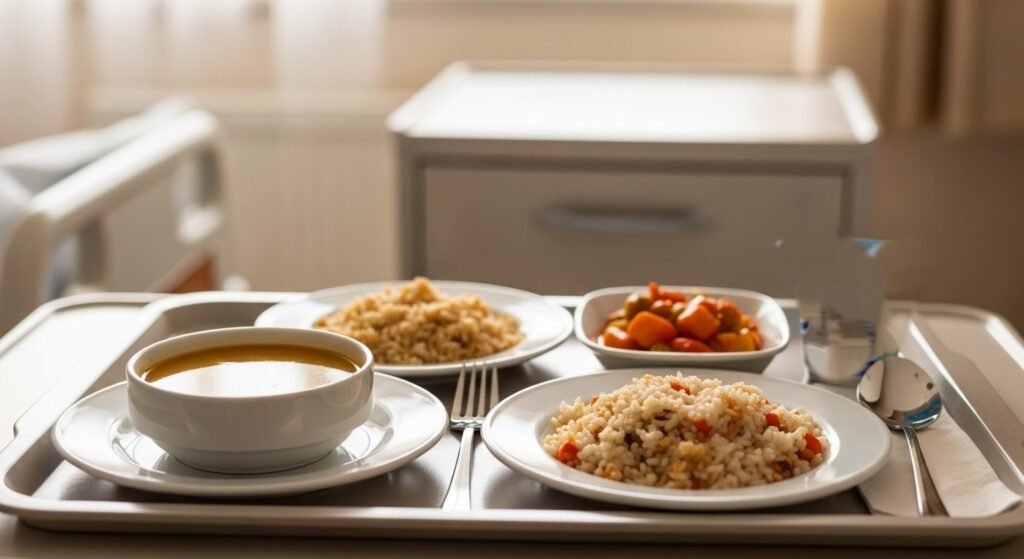
Turkish hospital meals often include soups, rice, vegetables, yogurt, and bread. Warm, comforting dishes are common, reflecting the cultural importance of food as care and support during illness.
