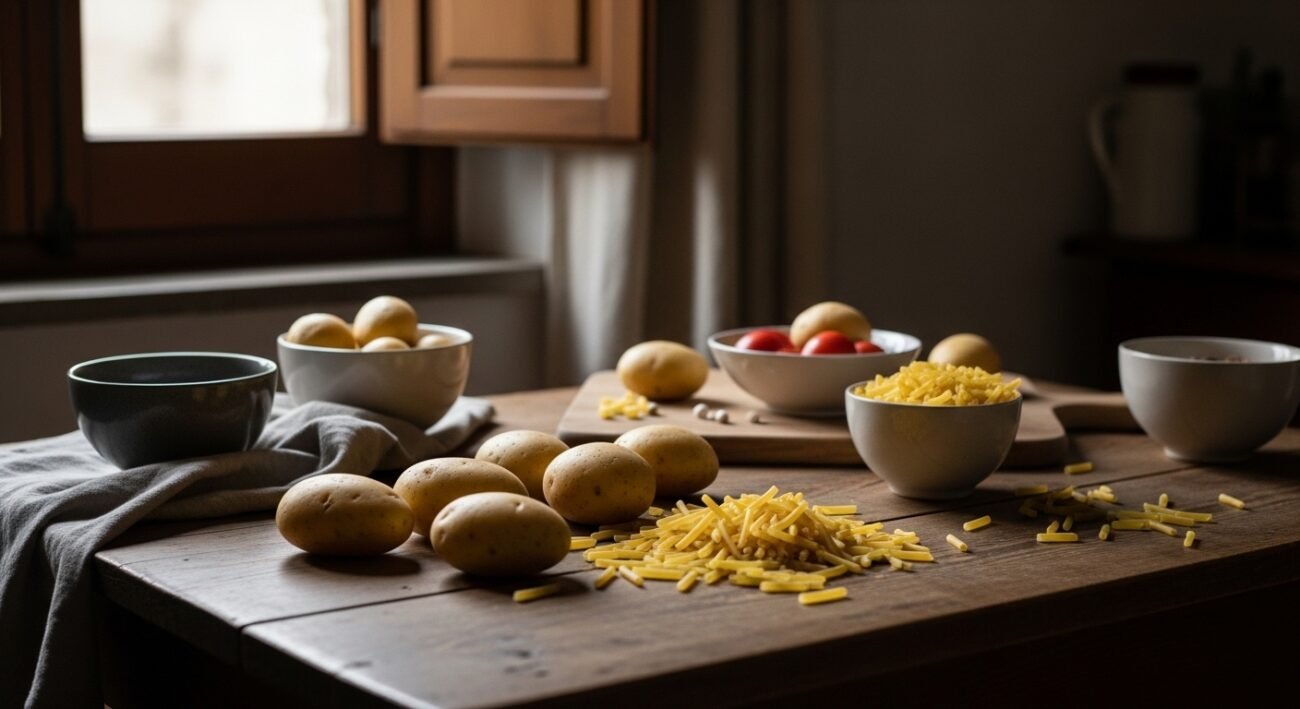
Pasta e patate carries quiet brilliance, much like actual Italian cooking – flavor flows soft and clear, like flowing water. Hailing from the south, especially Naples, lies a quiet dish built on ordinary things delivering deep heat. More than broth, less than noodles, it drifts uncertainly between terms, never pushing its way forward. Most people overlook where true smoothness really originates – it flows from potato and pasta starch, processed by simmering them yourself; that mix glides gently over the tongue, light as soft velvet, without any milk involved.
A Dish Rooted in Cucina Povera
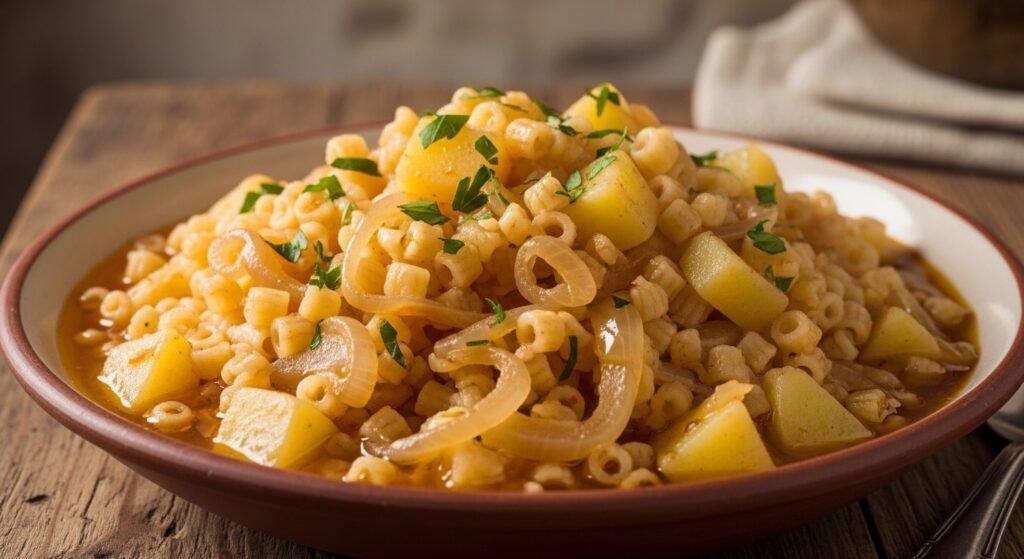
Out of kitchen scraps came pasta e patate, where little meant everything somehow took shape. Leftover bits – potatoes, old noodles, onions, a pour of olive oil – became the base. It wasn’t about having more; it lived by what was already there. What mattered was how folks treated their bare resources.
The Ingredients Are Simple and Intentional
Potatoes show up first in traditional pasta e patate, along with short-shaped noodles, onion, olive oil, water, salt. Not every version carries that note; plenty stay clear of animal pieces altogether. Then there’s the tomato paste, sometimes mixed in, sometimes left behind like a quiet debate across kitchens.
Always Prioritize Potatoes First
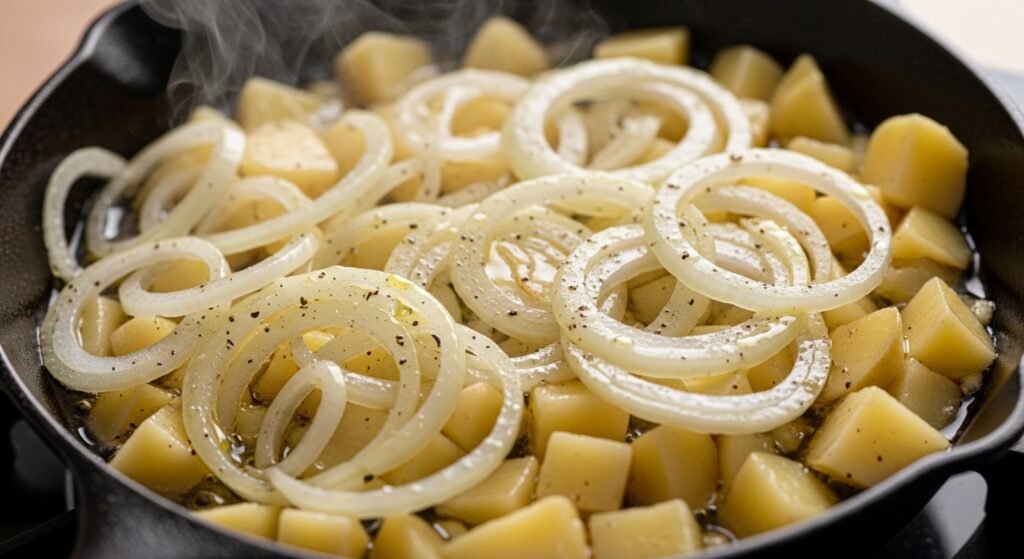
Fragrant onion slices lose firmness as golden droplets of olive oil rise to meet them, transforming into softness without burning depth. Heat lingers low, skipping the crisp edge that flame often brings. Before long, chunks of potato slip into view – chopped fine, drinking in scent and steam much like quiet listeners absorb stories.
One Pot, One Texture
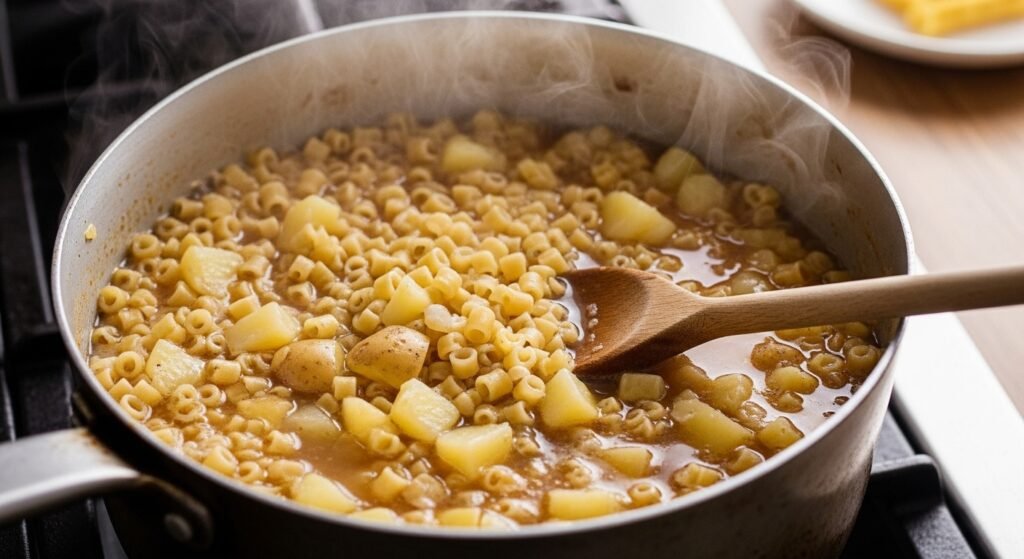
What sets it apart? Here, the pasta cooks within the very pot holding the potatoes, no extra vessel needed. Long coils give way to small forms – ditalini, tubetti, or sliced spaghetti pieces – slipping directly into the simmering spud broth. Heat changes the pasta and potato. Blending or mixing with milk isn’t required here.
Stirring Is Part of the Technique
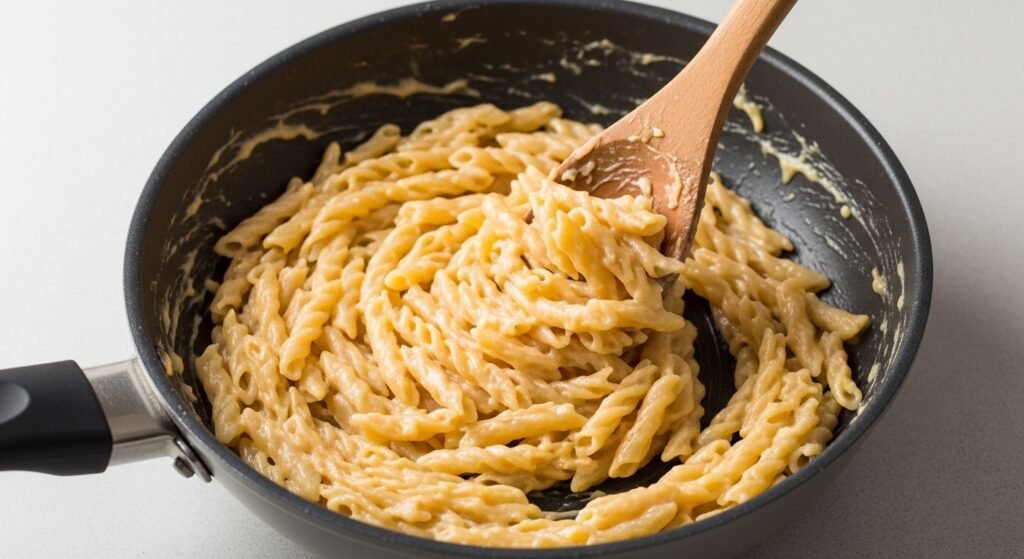
Stirring matters more here than in typical pasta recipes. Because the mixture cooks slowly, constant motion keeps it from clumping. As it transforms, too much rest can cause parts to stick together. What you aim for shows up when the sauce holds like a soft promise – heavy in bite, yet smooth enough to slide down easily.
Finishing With Restraint
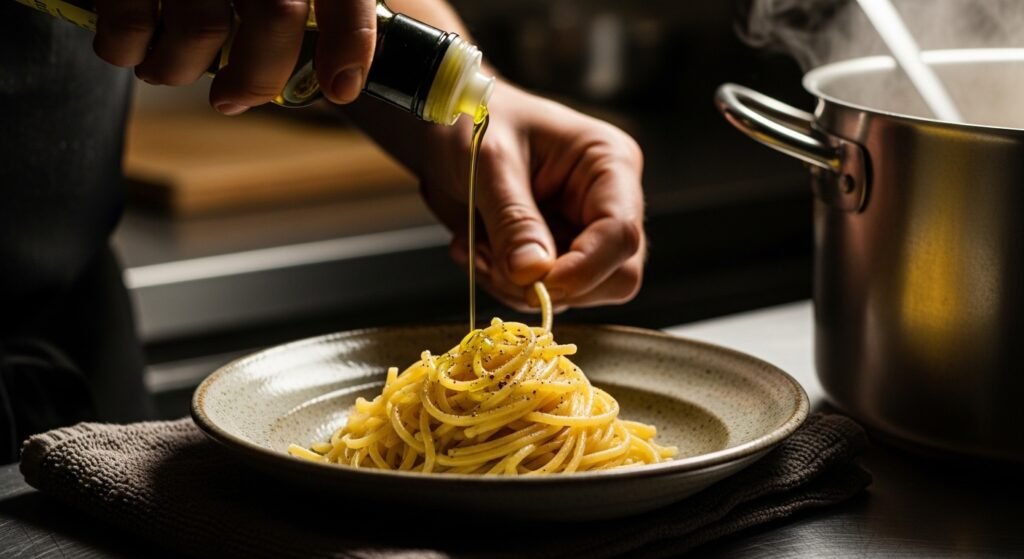
When the pasta feels done yet still has bite, it comes out of the pot. A splash of olive oil goes in next, possibly a pinch of pepper underneath. Some people cover it briefly – just sixty seconds or so – letting each layer settle into its own sauce.
Why It Still Matters
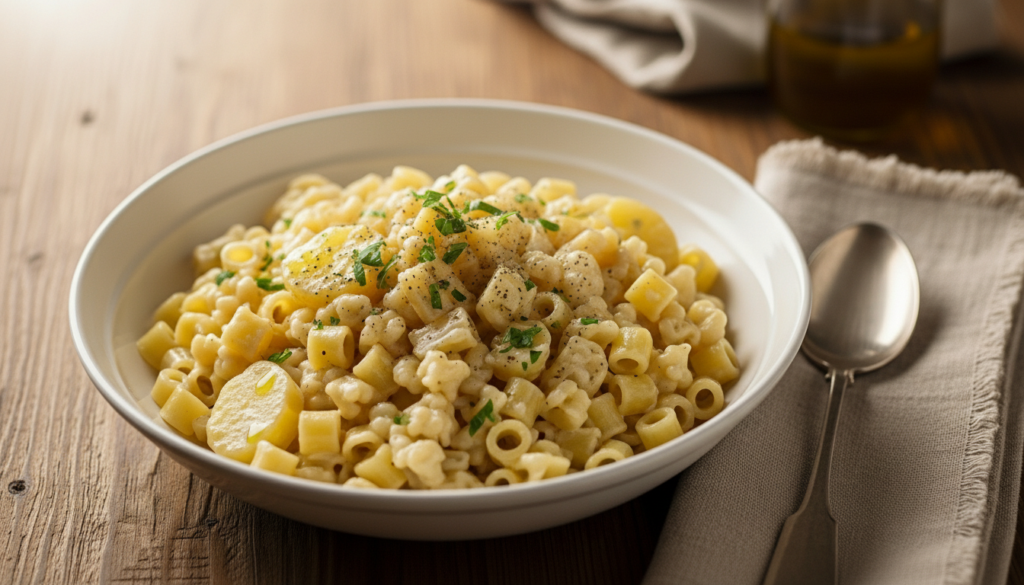
Pasta e patate sticks around – it tells the truth about meals. Not taking shortcuts, skipping bold spices, leaving nothing extra. It leaves you satisfied but not weighed down, calm in flavor yet clear on taste. Each sip carries the weight of time – shaped by steady hands, quiet effort, handed forward without fanfare.
