
Muscle holds on when protein leads the way. Feeling satisfied takes longer, so hunger doesn’t jump ahead. Digestion adds a tiny kick to energy output over time. Weight shifts better if this detail matters. Rather than hand out single answers for everyone, weighing influence by body mass makes sense here. This version splits facts into steps you can actually follow.
Why Protein Matters During Weight Loss

Less food might lead to less fat, yet sometimes muscle goes too. Without enough protein, muscles can vanish just as fast as fat does. Protecting those muscles means keeping your metabolism steady. When you include protein in meals, hunger drops while fullness rises. Sticking to healthier eating gets simpler when the body feels more satisfied.
General Guideline for Weight Loss

When it comes to healthily losing weight, experts often suggest between 0.7 and 1 gram of protein for each pound you weigh. That amount shifts slightly if you use kilograms instead – roughly 1.6 to 2.2 grams per kilogram. Those pushing hard in workouts or moving a lot might find value closer to the top limit.
Protein Breakdown by Body Weight

To lose weight, aim for 0.7 to 1 gram of protein per pound of body weight (1.6 to 2.2 grams per kg). A 120-pound person needs about 84-120 grams daily; a 150-pound person requires 105-150 grams; a 180-pound person needs 126-180 grams; and a 200-pound person could need 140-200 grams. Your target may vary based on your activity level and goals, but staying within this range helps preserve muscle while losing fat.
Should You Use Goal Weight Instead

When you carry excess weight, certain experts recommend calculating protein needs using your target weight instead of what you weigh now. This helps avoid sky-high targets that might not be needed at all.
Best Sources of Protein for Weight Loss
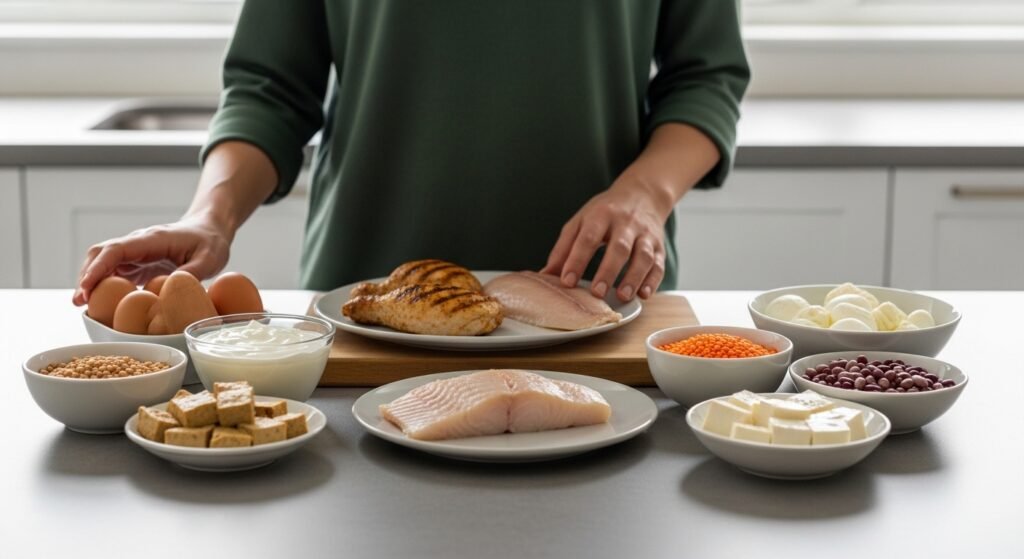
Filling up on lean proteins cuts down on overall calories. Think chicken breast, fish, Greek yogurt, eggs – these work well. Also, try cottage cheese, tofu, lentils, beans, or even a protein powder now and then. When you eat these with high fiber items, staying satisfied gets easier.
Spreading Protein Throughout the Day

Rather than saving most protein for dinner, spread it out over the day. Aim for 25 to 40 grams at each meal, adjusting according to how large you are. That helps hold onto muscle tissue while keeping hunger steady until the next meal.
