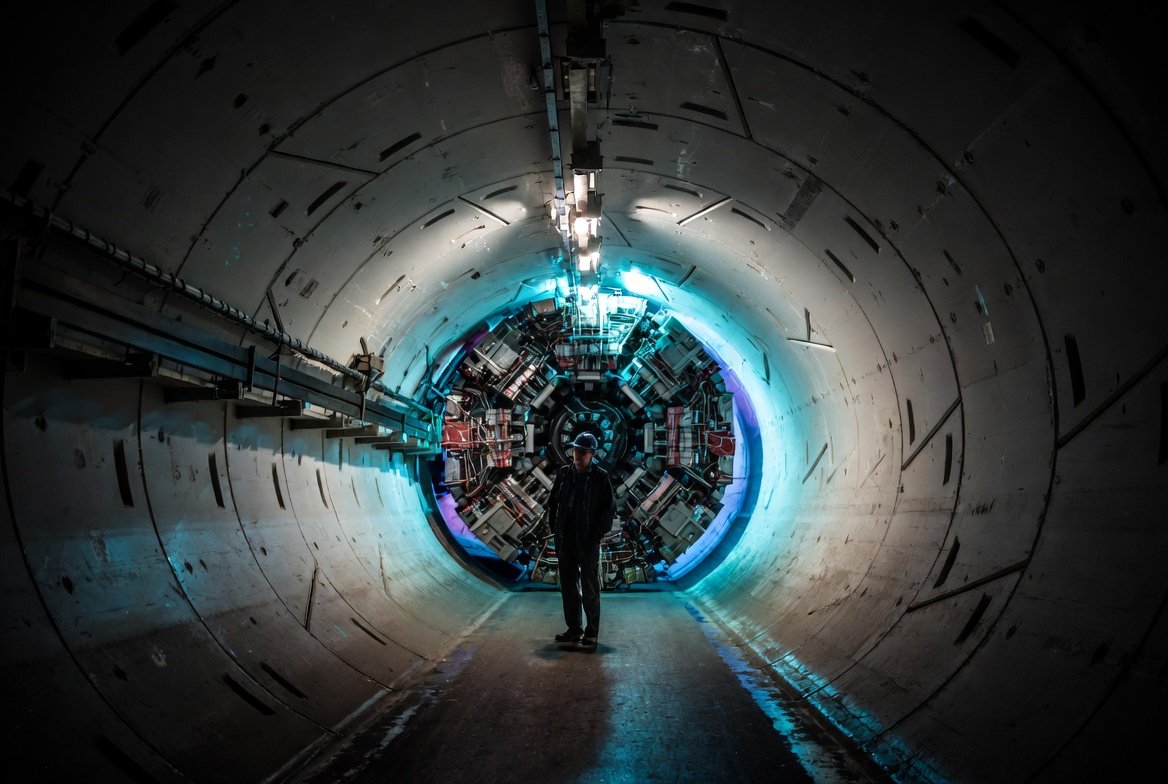
For more than a decade, physicists have been waiting for a breakthrough that could transform our understanding of reality. While the CERN Large Hadron Collider (LHC) famously confirmed the Higgs boson in 2012, the wave of new discoveries many expected never quite arrived. Now, a bold idea suggests the next revolution in physics may not come from smashing particles harder, but from studying incredibly rare particle decays that whisper clues from an even deeper layer of the universe — the so-called “zeptouniverse.”
The LHC’s Big Win — And What Didn’t Follow
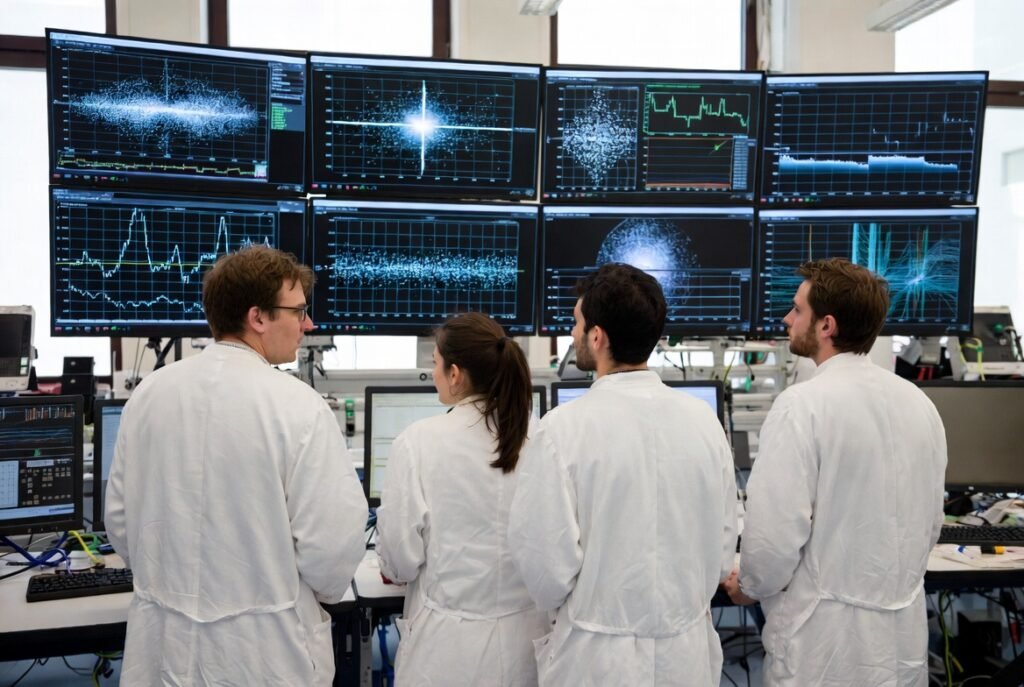
Right now, the Large Hadron Collider stands as humanity’s top tool for smashing subatomic particles. When it spotted the Higgs boson, that moment shook the foundations of today’s scientific world. Still, hopes were high for a sudden surge of unfamiliar stuff – particles hiding answers about dark matter or space’s secrets – to flood into view. That expected deluge never showed up. With silence where expectation lived, certain scientists wonder instead if hidden truths sit just out of reach, waiting past what today’s machines can test.
What Scientists Mean by the “Zeptouniverse”

Imagine a size so tiny it barely registers – around one billionth of a billionth meter – that’s what people call the “zeptouniverse.” Daily reality? Not here. Yet even the Large Hadron Collider, incredibly precise, can’t quite reach this extreme depth. Scientists like Harry Cliff, contributing to New Scientist, point out strange actors might lurk beneath: unseen particles or energies. These hidden players won’t show up directly, but their quiet impact could be felt elsewhere, hidden in the data.
A Theory Gaining Attention
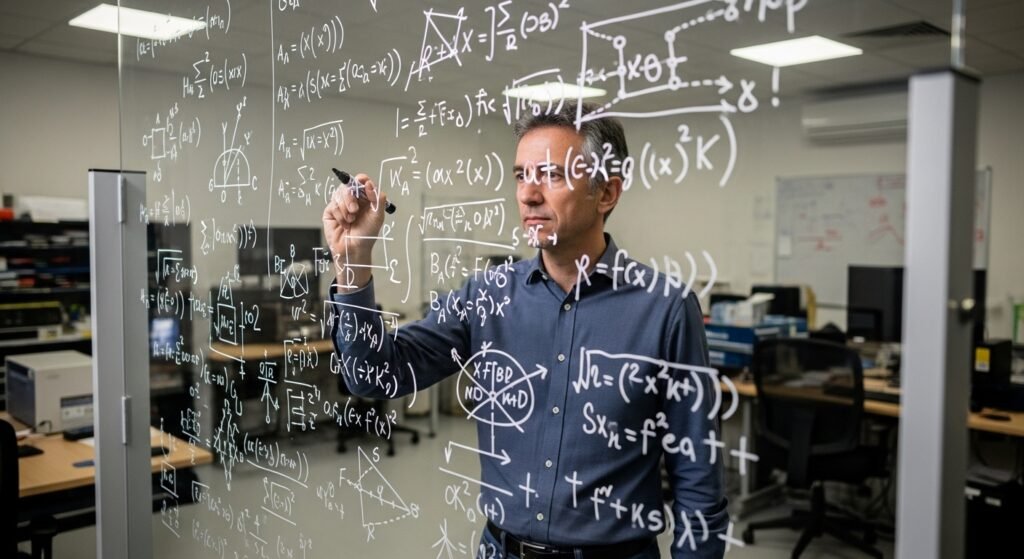
From Munich, where theory meets experiment, Andrzej Buras at the Technical University thinks differently. Rather than standing still for decades waiting on bigger machines, his idea focuses on what scientists already observe. By looking closely at rare breaks apart, like particles softly vanishing, clues might hide – tiny echoes from energies far beyond our reach. These faint trails could come from beyond our current grasp, whispering existence of unseen forces right here, now.
The “Magnificent Seven” Decays

A 2024 paper posted online earlier that year appeared on arXiv, where Buras pointed to seven rare ways particles can break down – those including strange and bottom quarks – and gave them the nickname “the magnificent seven,” suggesting any tiny shift away from what the Standard Model says they should do might signal something different at work, something hidden just past today’s most sensitive measurements.
Belle II’s Rare Observation
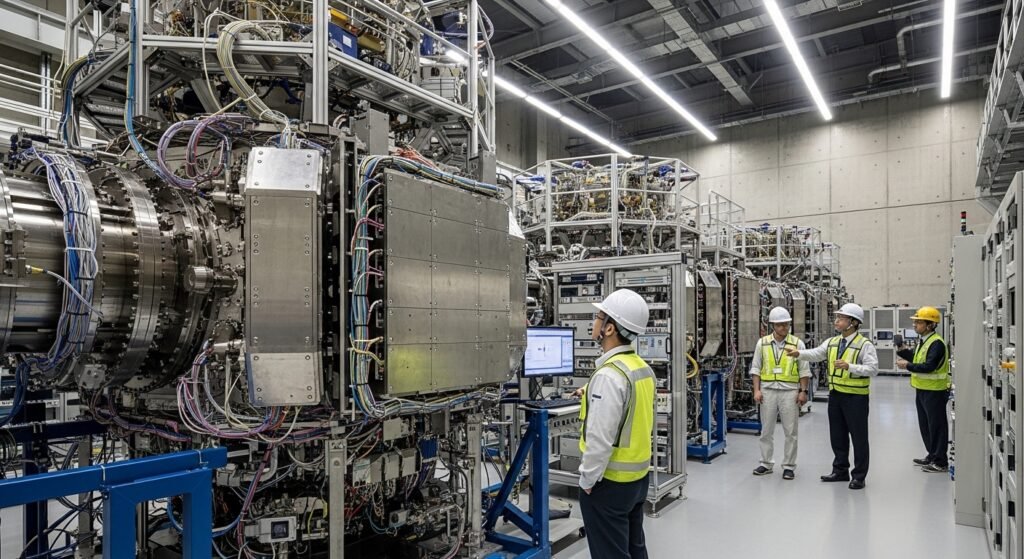
From Japan’s Belle II setup came results in 2023 showing a strange breakdown: a B particle splitting into a kaon along with two neutrinos. This kind of event hardly ever shows up, making it hard to pin down. Yet its faint signal offers hints about what happens below the level scientists can see up close using machines like the LHC.
A Breakthrough at NA62
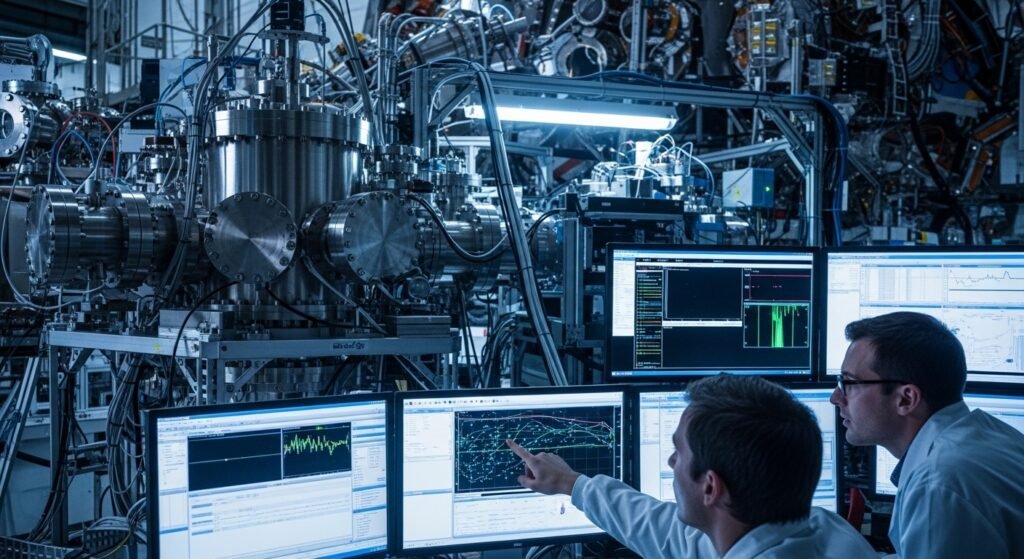
That summer of 2024, deep inside CERN’s labs, something unusual happened – a kaon broke apart in a way seen almost never before. Instead of decaying into just a pion, it split into a pion plus two particles made from matter and its antiparticle. Scientists call this kind of event a “rarest whisper” of the Standard Model’s limits. Equipment as precise as NA62 caught this glimpse, showing how finely the theory holds up when stretched near its edge.
Independent Confirmation from KOTO

Looking at old data, the KOTO team tries to spot infrequent kaon breaks apart. Finding them twice means scientists aren’t just seeing random blips – it could point to new rules of physics instead. When results match across tests, trust grows because repeated patterns show something real may be happening, not just noise.
Why Not Wait for a Bigger Machine?

Right now, CERN is looking at whether building a giant collider makes sense – this one would go way beyond today’s LHC, hitting much higher energy levels. Even though first startup isn’t planned before roughly 2070, scientists often talk about finding clues sooner using faint breakdown patterns in particles instead of full-on collisions. Over the next few years, checking these quiet events could quietly reveal what comes next.
A New Way to Search for Answers
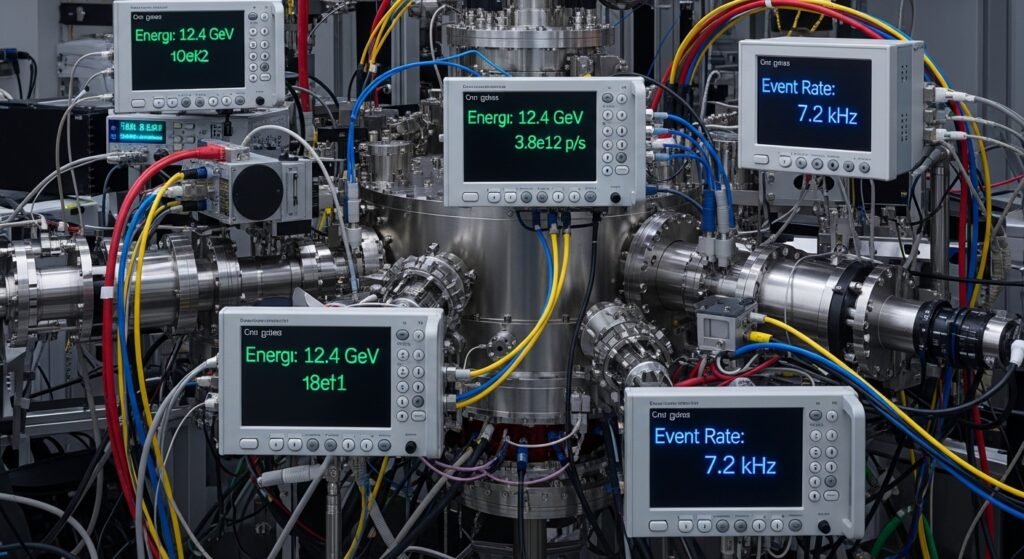
Even as scientists dig deeper into high-energy zones without major surprises, some start seeing hints – tiny trails left behind by hidden realities – that could be tracked not by blasting to new speed limits but by tuning detectors to catch faint signals hiding in today’s data.
Exploring The Unseen Edge of Space
Out there, near the zeptometer mark, hints of unseen physics are slowly being chased by scientists. For now, the rare breakdowns of kaons and B particles offer one of the clearest looks at what might lie beyond our current view. Only when stronger colliders come online might we truly see where this path leads.
